


 Language: English














Solutions
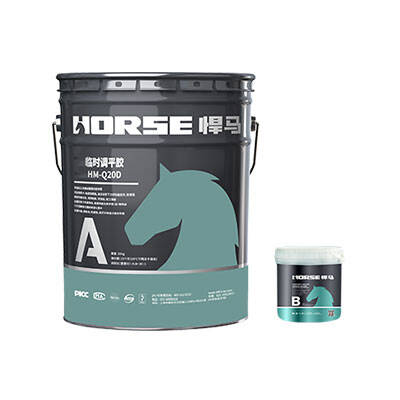
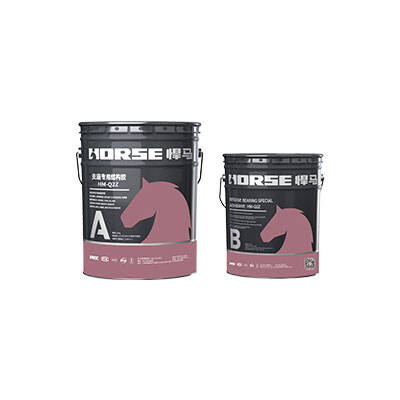
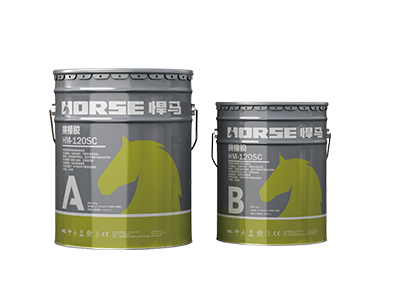
Horse Construction offers full range of structural strengthening materials with technical supports, documentation supports, products supports, project supports.
GFRP vs CFRP in Structural Strengthening: A Technical Comparison

When specifying fiber-reinforced polymer (FRP) systems for concrete, steel, or masonry strengthening, the two most common choices are Glass Fiber Reinforced Polymer (GFRP) and Carbon Fiber Reinforced Polymer (CFRP) . Both deliver corrosion resistance, high strength-to-weight ratios, and faster installation compared to traditional steel plate bonding or section enlargement — but their performance envelopes, cost profiles, and ideal application ranges differ significantly.
This guide provides a detailed engineering comparison to help you select the right FRP system for your next strengthening project.
Material Composition
Both GFRP and CFRP are composite materials consisting of reinforcing fibers embedded in a polymer matrix (typically epoxy, vinyl ester, or polyester resin). The key difference lies in the fiber type.
| Property | GFRP | CFRP |
|---|---|---|
| Fiber type | E-glass or S-glass (glass fibers) | Carbon (graphitized polyacrylonitrile or pitch precursor) |
| Typical fiber content | 55–65% by volume | 60–70% by volume |
| Matrix resins | Epoxy, vinyl ester, polyester | Epoxy (structural), vinyl ester |
| Color / appearance | Light-colored (white, tan, or tinted) | Dark gray to black |
GFRP uses glass fibers produced by melting silica sand and other minerals, then drawing them into fine filaments. E-glass is the industry standard for general-purpose applications; S-glass offers ~33% higher tensile strength for more demanding use. Alkali-resistant (AR) glass containing 16–20% zirconia is specified when direct contact with concrete is expected, preventing alkaline degradation over the service life.
CFRP fibers are manufactured from polyacrylonitrile (PAN) or pitch precursors that undergo stabilization, carbonization at 1,000–3,000°C, and surface treatment. The result is a fiber with exceptional stiffness and strength but limited elongation capacity.
Mechanical Properties
The following comparison summarizes the key mechanical parameters for externally bonded FRP systems used in structural strengthening. Data ranges reflect typical values from published research and manufacturer technical data sheets.
| Mechanical Property | GFRP | CFRP | Steel (reference) |
|---|---|---|---|
| Tensile strength | 800–1,500 MPa | 2,400–5,000 MPa | 400–600 MPa |
| Modulus of elasticity (E) | 40–85 GPa | 150–250 GPa (standard: ~165 GPa) | 200–210 GPa |
| Ultimate tensile strain | 1.5–3.0% | 1.2–1.8% | 10–25% |
| Density | 2.0–2.5 g/cm³ | 1.5–1.8 g/cm³ | 7.85 g/cm³ |
| Weight (per unit area vs. steel) | ~1/3 of equivalent steel | ~1/5 of equivalent steel | Baseline |
| Thermal expansion (longitudinal) | ~10 × 10⁻⁶ /°C | ~0.5–2.0 × 10⁻⁶ /°C | 12 × 10⁻⁶ /°C |
| Electrical conductivity | Non-conductive | Electrically conductive | Conductive |
--Strength: CFRP delivers 2–4× the tensile strength of GFRP and 5–8× that of structural steel. This makes CFRP the default choice when maximum load capacity gain is required with minimal added material thickness.
--Stiffness: CFRP's elastic modulus is comparable to steel, meaning it effectively controls deflection and cracking in flexural members. GFRP is significantly less stiff, so while it can increase strength, it provides less improvement in serviceability (deflection control).
--Ductility: GFRP has higher ultimate strain (up to 3.0%), giving it better energy absorption under cyclic or dynamic loading. This can be advantageous in seismic retrofitting where post-peak deformation capacity matters.
--Weight: Both are dramatically lighter than steel. CFRP is the lightest, which simplifies handling on tall structures and overhead work.
Strengthening Performance by Application
1 Flexural Strengthening of Beams and Slabs
When bonded to the tension face of a concrete beam or slab, FRP acts as external tensile reinforcement.
| System | Typical Capacity Increase | Deflection Control |
|---|---|---|
| CFRP (externally bonded) | 40–80% | Excellent (high E limits crack width) |
| GFRP (externally bonded) | 15–40% | Moderate (lower E allows more elongation) |
| NSM CFRP | 50–75% | Excellent |
| NSM GFRP | 25–50% | Good |
For structures requiring significant flexural capacity upgrades — such as bridges receiving heavier traffic loads or buildings converting to heavier occupancy — CFRP is typically the preferred system. GFRP can be sufficient for modest upgrades (e.g., adding a floor finish or light equipment loads) where deflection is not the governing design concern.
2 Shear Strengthening
U-wrapping or fully wrapping FRP around a beam provides shear reinforcement analogous to stirrups.
CFRP achieves higher shear capacity per layer due to its higher tensile strength. Typical improvements range from 30–60%.
GFRP provides 20–40% shear improvement and benefits from higher strain capacity.
3 Column Confinement (Axial Strengthening)
Wrapping columns with FRP creates lateral confinement, increasing both axial load capacity and ductility.
| System | Axial Capacity Increase | Ductility Improvement |
|---|---|---|
| CFRP wrap | 40–90% | Moderate (high stiffness, lower strain) |
| GFRP wrap | 20–50% | Higher (greater strain allows more deformation before rupture) |
4 Masonry and Heritage Structures
For strengthening unreinforced masonry (URM) walls, historic buildings, and structures where aesthetics must be preserved:
GFRP is often preferred because it is non-conductive (safe around electrical installations), easier to cut and shape on-site, and lighter in color (less visually intrusive if exposed).
CFRP is used when maximum strength increase is needed, such as in seismic retrofits of heritage structures in high-risk zones.
Durability and Environmental Resistance
Both FRP types resist corrosion far better than steel, but they differ in specific environmental sensitivities.
| Environment | GFRP Performance | CFRP Performance |
|---|---|---|
| Marine / coastal (chloride exposure) | Excellent | Excellent |
| Industrial chemical exposure | Good (vinyl ester matrix recommended) | Excellent |
| Alkaline environment (direct concrete contact) | Requires AR-glass; standard E-glass degrades over time | Excellent (carbon is chemically inert) |
| UV exposure | Requires UV-protective coating | Requires UV-protective coating |
| High temperature (>80°C sustained) | Matrix softens; limited | Matrix softens; limited |
| Fire exposure | Glass fibers survive; matrix degrades | Carbon fibers survive higher temps; matrix still degrades |
| Freeze-thaw cycling | Excellent (low water absorption) | Excellent |
| Fatigue / cyclic loading | Good (higher strain tolerance) | Good (superior to steel) |
Cost Comparison
Cost is often the decisive factor in FRP selection for large-scale projects.
A GFRP system may cost 40–60% less in materials than an equivalent CFRP system.
However, achieving the same structural capacity with GFRP may require more layers or larger bonded areas, partially offsetting the material savings.
And the life-cycle cost of CFRP is excellent.
Design Standards and Codes
Both GFRP and CFRP strengthening systems are covered by established international design codes:
| Standard | Coverage |
|---|---|
| ACI 440.2R (USA) | Externally bonded FRP for concrete strengthening — covers both CFRP and GFRP |
| fib Bulletin 14 (Europe) | FRP reinforcement for concrete structures |
| TR 55 (UK) | Design guidance for strengthening concrete structures using FRP composites |
| CAN/CSA S806 (Canada) | Design and construction of building components with FRP |
| ACI 440.1R | GFRP and FRP bars as internal reinforcement (new construction) |
Product Forms Available
Both GFRP and CFRP are available in multiple product forms for structural strengthening:
| Product Form | CFRP | GFRP |
|---|---|---|
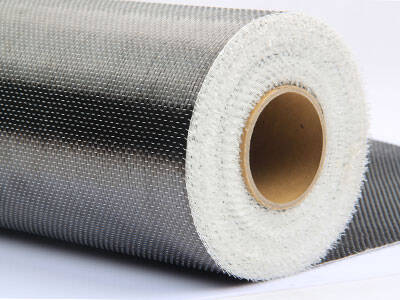
| Wet lay-up fabric | Unidirectional or biaxial carbon fabric, impregnated on-site with epoxy | E-glass or AR-glass fabric, impregnated on-site |
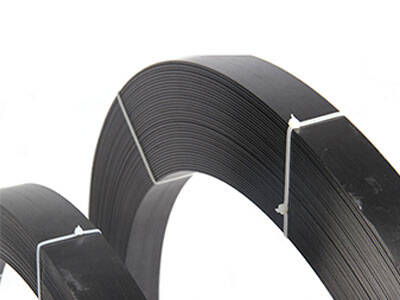
| Pre-cured laminate / plate | Pultruded carbon plates (1.2–1.4 mm thick), bonded with structural adhesive | Pultruded glass plates |
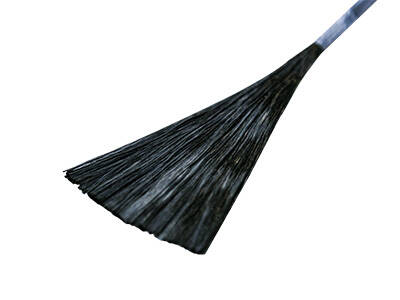
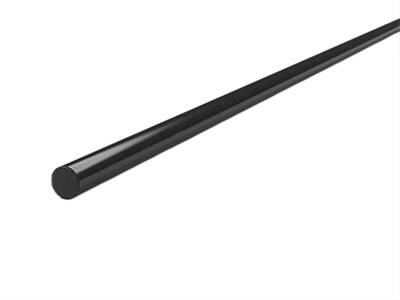
| NSM rods / bars | Carbon fiber rods (5–12 mm diameter), installed in grooves | GFRP rods (6–16 mm diameter), installed in grooves |
| Grid / mesh | Carbon grid for TRM/FRCM systems or embedded reinforcement | Glass grid for TRM systems, masonry reinforcement |
| Wrap / jacket | Carbon fiber wrap for column confinement | Glass fiber wrap for column or pile wrapping |
| Spiral wrap | For circular column retrofit | For pile, pole, or marine structure wrapping |
Neither material is universally "better." The optimal choice depends on the specific structural demand, environmental conditions, design code requirements, and project budget.
For engineers and contractors evaluating FRP strengthening systems, the key is to match the material properties to the performance requirements of the structure — not to default to one fiber type for all applications.
Horse Construction offers a complete range of CFRP and GFRP strengthening systems, including carbon fabric, carbon plates, structural adhesives, and NSM rods. Our technical team can assist with material selection, design calculations, and installation support for your strengthening project.
Contact us for technical data sheets, design guidance, and project-specific recommendations.
You can find anything here you are in need of, have a trust trying on these products, you will find the big difference after that.

High strength unidirectional carbon fiber fabric for concrete repair and structural strengthening

High strength unidirectional carbon fiber fabric for concrete repair and structural strengthening

High strength unidirectional carbon fiber fabric for concrete repair and structural strengthening
