


 Language: English














Solutions
Horse Construction offers full range of structural strengthening materials with technical supports, documentation supports, products supports, project supports.
Bridge Structural Strengthening

During the long-term service of reinforced and prestressed concrete bridges, structural flexural members—such as main girders, T-beams, and small box girders—are susceptible to various structural pathologies. These include cracking, stiffness degradation, accumulation of residual deflection, reinforcement corrosion, and a decline in load-bearing capacity, all resulting from the coupled effects of alternating vehicular loads, temperature and humidity cycles, freeze-thaw cycles, carbonation, and chloride ion ingress.
Reinforcement using carbon fiber-reinforced polymer (CFRP) plates represents a novel, minimally invasive, highly efficient, and durable strengthening technique. It enables the remediation of structural defects and the enhancement of load-bearing safety reserves without altering the bridge's original structural system.
Material Properties and Structural Reinforcement Mechanism of Carbon Fiber Plates
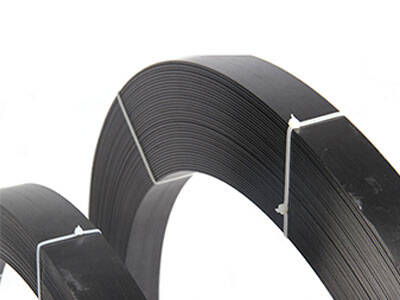
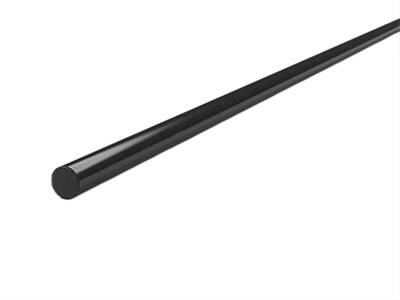
Carbon fiber plates are manufactured by molding and curing continuous carbon fiber filaments with modified epoxy resin. Compared to carbon fiber fabric, they offer distinct advantages such as fiber continuity, uniform stress distribution, stable elastic modulus, and superior resistance to peeling. Consequently, they serve as a specialized, high-performance material specifically designed for the flexural strengthening of bridges. The carbon fiber plates commonly utilized in bridge reinforcement engineering typically possess a tensile strength of ≥2800 MPa and an elastic modulus of ≥165 GPa; moreover, with a density of only one-quarter that of steel, they are characterized by exceptional strength, fatigue resistance, corrosion resistance, and an absence of plastic deformation.
When a reinforced concrete flexural member is subjected to loading, the tensile forces within the tension zone are primarily borne by the longitudinal steel reinforcement. However, distressed bridges often operate in a cracked state, resulting in excessive stress levels within the steel reinforcement and insufficient structural stiffness. Reinforcement using carbon fiber plates involves bonding the plates to the regions of maximum tension on the structural member—typically utilizing a specialized structural epoxy adhesive—thereby establishing a synergistic load-bearing system comprising the concrete, steel reinforcement, and carbon fiber plate. Under applied loads, stress transfer across the interface is achieved through a combination of adhesive bonding and mechanical interlocking. The carbon fiber plate assumes a significant portion of the tensile stress, thereby effectively reducing the stress levels within the steel reinforcement, constraining crack propagation, and limiting the vertical deflection of the beam or slab. Ultimately, this process restores and enhances the flexural stiffness and load-bearing capacity of the structural member, while simultaneously improving the overall fatigue performance of the structure.

Advantages of Carbon Fiber Plates Compared to Traditional Bridge Reinforcement Methods
Compared to traditional reinforcement techniques, carbon fiber plate reinforcement aligns perfectly with the modern requirements for bridge strengthening—specifically being "minimally invasive, low-disruption, long-lasting, and cost-effective." Its core advantages are as follows:
1. Excellent Structural Synergy and High Reinforcement Precision: The elastic modulus of carbon plates closely matches that of concrete and steel reinforcement, eliminating issues such as stress lag or abrupt changes in stiffness. This allows for the precise compensation of structural deficiencies in load-bearing capacity and rigidity, effectively resolving critical structural defects such as excessive cracking and deflection. Consequently, the reinforced structure exhibits uniform and stable stress distribution.
2. No Additional Load; No Alteration to Original Structure: Carbon plates are extremely thin (typically 1.2–3.0 mm) with negligible self-weight; thus, reinforcement adds no additional dead load to the bridge. Furthermore, the process does not alter the structure's force transmission system, clearance dimensions, or deck alignment, nor does it induce additional stress on piers, abutments, or foundations. This makes it ideally suited for reinforcement in constrained environments, such as urban viaducts and scenic bridges.
3. Weather-Resistant and Durable; Low Life-Cycle Cost: This method completely resolves the common issue of steel plate corrosion associated with traditional bonded-steel reinforcement. Carbon plates possess stable chemical properties, offering excellent resistance to acids, alkalis, freeze-thaw cycles, and UV-induced aging. They ensure long-term, stable performance even under complex outdoor conditions. The reinforced system boasts a service life of over 30 years, significantly reducing future maintenance, repair, and refurbishment costs.
4. High Construction Efficiency; Minimal Traffic Disruption: The process primarily utilizes "dry" or "semi-dry" minimally invasive techniques, eliminating the need for heavy machinery or wet-cast concrete operations. With streamlined procedures and short curing periods, it facilitates "half-width" construction—allowing for the rapid reopening of traffic lanes—thereby greatly minimizing disruption to traffic flow on major urban thoroughfares and trunk highways.
5. Broad Applicability; Supports Composite Reinforcement: Carbon plates can be utilized independently for flexural strengthening, or they can be integrated into a composite reinforcement system—combined with crack grouting, carbon fabric shear reinforcement, and end anchorage—to address complex structural defects across a wide variety of bridge components, including box girders, T-beams, and hollow slabs.

Scope of Applicability and Limitations of Carbon Fiber Plates
This technology is suitable for the strengthening of bridges featuring sound concrete substrates with adequate strength, where deficiencies are limited to insufficient load-bearing capacity, stiffness degradation, cracking, or excessive deflection. For bridges exhibiting severe alkali-aggregate reaction in the substrate, insufficient concrete strength, unsettled foundation settlement, or severe structural distortion and deformation, substrate repair, settlement remediation, and structural alignment must be completed prior to implementing carbon plate reinforcement. Furthermore, carbon fiber plates possess limited resistance to high temperatures and impact forces; therefore, in environments involving open flames or high heat, the application of a fire-retardant coating is required, and exposed sections must be adequately protected to prevent damage caused by external impact forces.
Leveraging its comprehensive advantages—including high strength, lightweight properties, exceptional durability, minimal invasiveness, and low disruption—carbon fiber plate reinforcement technology effectively addresses the shortcomings of traditional bridge strengthening methods. It enables the precise remediation of structural defects, enhances structural safety margins, and extends the service life of bridges, all while requiring only minimal structural intervention.
You can find anything here you are in need of, have a trust trying on these products, you will find the big difference after that.

High strength carbon fiber reinforced polymer (CFRP) strip / laminate / plate for structural strengthening and concrete repair

High strength carbon fiber reinforced polymer(CFRP) plate for structural strengthening and concrete repair

HM-1.4TT is a high strength, high modulus unidirectional carbon fiber reinforce polymer(CFRP) laminate for structural strengthening
