


 Language: English














Solutions
Horse Construction offers full range of structural strengthening materials with technical supports, documentation supports, products supports, project supports.
Carbon Plate vs Carbon Fiber Sheet?
In the field of concrete structure reinforcement, carbon fiber materials have become the mainstream choice to replace traditional steel plate reinforcement due to their core advantages of light weight, high strength, corrosion resistance and convenient construction.
As the two core categories of carbon fiber reinforcement, carbon plate (carbon fiber plate) and carbon fiber sheet have always been a difficult choice for owners, contructors and designers. Many people have misunderstandings: "Both are carbon fiber, so you can choose any one", "Carbon fiber sheet is cheap, so it is more cost-effective to choose it", "Carbon plate has high stiffness and is suitable for all scenarios". In fact, there are significant differences between the two in material, process, performance and applicable scenarios. Choosing the wrong one will not only increase costs, but also leave potential safety hazards.
Material and Processing Technology Determine Essential Differences
The core raw material of both carbon plate and carbon fiber sheet is high-strength carbon fiber filament, but the differences in processing technology and form directly determine their performance characteristics and applicable scenarios, which is also the core basis for type selection. The specific details are as follows:
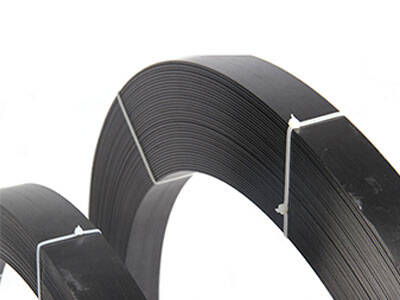
Carbon Plate (Carbon Fiber Plate): It is a rigid plate formed by impregnating carbon fiber filaments with epoxy resin, followed by high-temperature molding and curing, belonging to "prefabricated" reinforcement material. During the processing, it is necessary to strictly control the arrangement density of carbon fiber filaments (unidirectional arrangement to ensure uniform force), the content of glue (resin content 40%-50% to ensure bonding strength). After molding, the thickness is uniform (conventional 1.2mm, 1.4mm, 2.0mm, 3.0mm), the width can be customized (50mm, 100mm, 150mm, 200mm, 300mm), the texture is hard, the feel is similar to thin steel plate, it is not easy to bend or deform, and the edge is flat without burrs (for high-quality products).
Supplementary Details: Carbon plates can be divided into ordinary carbon plates and prestressed carbon plates according to the process. Ordinary carbon plates are passive bonded reinforcement, while prestressed carbon plates need to be pre-applied with prestress (usually 0.4-0.6 times the tensile strength of carbon fiber), belonging to active reinforcement. The 2026 specification adds a new chapter on the application of prestressed carbon plates, clarifying its application standards in large-span components and high bearing capacity demand scenarios, which is the mainstream direction of high-end reinforcement in the future.
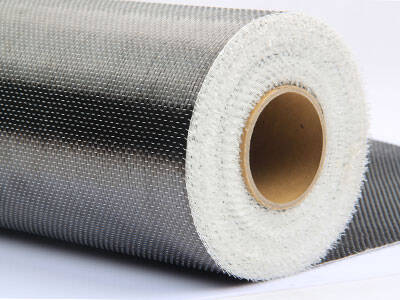
Carbon Fiber Sheet: It is a sheet-like material made of carbon fiber filaments through weaving process, belonging to "on-site forming" reinforcement material. According to the weaving method, it can be divided into unidirectional sheet (mainstream, selected for more than 90% of reinforcement scenarios) and bidirectional sheet (only used for special bidirectional force-bearing components). It is thin (conventional 0.111mm-0.333mm), soft in texture, can be flexibly cut into any shape, and can closely fit the surface of components, especially suitable for curved and special-shaped components. However, it needs to be pasted in multiple layers on site (usually 3-5 layers) to achieve the same reinforcement effect as carbon plate.
Supplementary Details: The core quality index of carbon fiber sheet is surface density (carbon fiber content per unit area). The higher the surface density, the thicker the single sheet, the higher the reinforcement efficiency, but the construction difficulty also increases accordingly (multi-layer pasting is prone to delamination and hollowing).
Material Form
Rigid plate, unidirectional carbon fiber arrangement, thickness 1.2-3.0mm, width 50-300mm
Flexible sheet, unidirectional/bidirectional weaving, thickness 0.111-0.333mm, width 1000-1500mm
Specification Requirements: The thickness of carbon plate shall not be less than 1.2mm, and the thickness of single carbon fiber sheet shall not exceed 0.333mm
Stiffness Performance
Carbon plate: High stiffness (elastic modulus ≥ 160GPa), close to that of construction steel, not easy to deform, can effectively control component deflection and reduce deformation
Carbon fiber sheet: Low stiffness (elastic modulus is the same as that of carbon plate, but the overall stiffness is much lower than that of carbon plate due to thin thickness), easy to deform, and the effect of controlling deflection is limited
Specification Requirements: For the reinforcement of large-span components (span ≥ 10m), carbon plates with stiffness ≥ 160GPa shall be selected, and carbon fiber sheet shall be superimposed in multiple layers to meet the stiffness requirements
Applicable Scenarios
Carbon plate: 1. Flexural and shear reinforcement of concrete beams and slabs, especially suitable for scenarios with insufficient bearing capacity and excessive deflection; 2. Reinforcement of bridge girders and large-span components (such as factory crane beams); 3. Reinforcement of old residential districts and historic buildings (light weight, no increase in component load); 4. Projects with tight construction period and need to be completed quickly; 5. Prestressed reinforcement scenarios (only carbon plates can be used)
Carbon fiber sheet: 1. Scenarios where the component surface is irregular or curved (such as curved beams and cylindrical columns) and carbon plates cannot fit; 2. Local crack repair of components (width ≤ 0.2mm); 3. Reinforcement of small components (such as lintels and cornices); 4. Projects with limited budget, loose construction period and acceptable multi-layer pasting; 5. Local reinforcement of walls and floor slabs |
New Specification: Prestressed carbon plates can be used for bridge and large-span structure reinforcement, and the bearing capacity can be increased by 30%-50%; carbon fiber sheet shall not be used for prestressed reinforcement
Reinforcement Effect
Carbon plate: Active force (prestressed carbon plate) or passive force (ordinary carbon plate), carbon fiber filaments are arranged neatly, which can give full play to the material strength, and the bearing capacity is significantly improved; single glue layer, firm bonding, not easy to debond or delaminate
Carbon fiber sheet: Passive bonding force, due to the weaving characteristics of carbon fiber filaments, the force uniformity is slightly poor, and the material utilization rate is lower than that of carbon plate; after multi-layer pasting, there are many glue layers, and improper construction is prone to delamination and debonding, affecting the reinforcement effect
Specification Requirements: After carbon plate reinforcement, the bearing capacity of components shall not be increased by more than 40%; when carbon fiber sheet is pasted in multiple layers, the bearing capacity shall not be increased by more than 30%
Durability
Carbon plate: Corrosion resistance, aging resistance and UV resistance, service life ≥ 50 years under standard construction; single glue layer, no delamination hidden danger, no frequent later maintenance
Carbon fiber sheet: Corrosion resistance and aging resistance, but after multi-layer pasting, there are many glue layers. If air bubbles are not eliminated during construction, delamination and debonding are prone to occur, affecting durability; additional protective treatment is required for outdoor scenarios, and the frequency of later maintenance is higher than that of carbon plate
Specification Requirements: For outdoor and humid environments, both shall be painted with fireproof coating (thickness ≥ 3mm), and carbon fiber sheet shall be added with moisture-proof layer
Specification Restrictions
Carbon plate: 1. Thickness shall not be less than 1.2mm, width shall not exceed 300mm; 2. Longitudinal lap length ≥ 100mm, no transverse lap; 3. Prestressed carbon plates shall meet the tension control stress requirements
Carbon fiber sheet: 1. Thickness of single sheet shall not exceed 0.333mm, total pasting thickness shall not exceed 2.0mm; 2. Longitudinal lap length ≥ 150mm, transverse lap length ≥ 100mm; 3. Shall not be used for prestressed reinforcement and main reinforcement of large-span components
Key Revision of 2026 Specification: A new chapter on carbon plate construction acceptance rules is added, clarifying that the hollowing rate ≤ 3% (original standard 5%) and the hollowing rate of carbon fiber sheet ≤ 5%
Core Principles of Type Selection Under the 2026 Specification Trend (Must Read)
Core Scenarios for Prioritizing Carbon Plates (Combined with New Specification Requirements):
- For large-span components (span ≥ 10m) and high bearing capacity requirements (bearing capacity increase ≥ 30%), prestressed carbon plates are preferred, which conforms to the new chapter requirements of the 2026 specification;
- For straight components (beams, slabs, columns), tight construction period and pursuit of long-term durability, ordinary carbon plates are preferred, with high construction efficiency, low rework rate and better overall cost;
- For the reinforcement of old buildings and historic buildings, carbon plates are preferred. The lightweight design does not increase the component load and avoids damaging the original structure of the building.
Core Scenarios for Prioritizing Carbon Fiber Sheet:
- The component surface is irregular or curved (arc, circle), the carbon plate cannot fit, and the carbon fiber sheet has prominent flexibility advantages;
- Local crack repair and small component reinforcement, no high stiffness is required, carbon fiber sheet has low material cost, can be flexibly cut and has strong adaptability;
- Limited budget, loose construction period, and the construction team has mature technology (can control the quality of multi-layer pasting), carbon fiber sheet can be selected to reduce the initial material cost.
You can find anything here you are in need of, have a trust trying on these products, you will find the big difference after that.

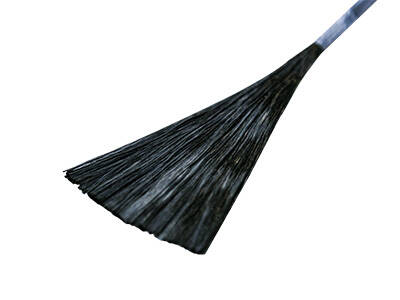
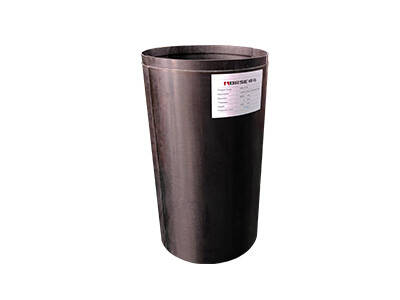
High strength, unidirectional carbon fiber wrap pre-saturated to form a carbon fiber reinforced polymer (CFRP) wrap used to strengthen structural concrete elements.

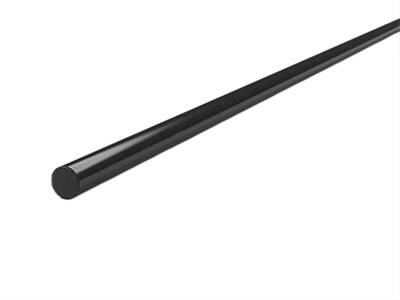
High strength carbon fiber reinforced polymer (CFRP) strip / laminate / plate for structural strengthening and concrete repair

High strength, unidirectional carbon fiber fabric pre-saturated to form a carbon fiber reinforced polymer (CFRP) fabric used to strengthen structural concrete elements.
