Language: English














Repair Cracked Concrete Beams
Structural Repair of Concrete Cracks:Seal Cracks+Crack Injection+Carbon Fiber
Concrete cracks in industrial structures are not just surface defects. They often indicate a loss of structural continuity, increased risk of reinforcement corrosion, and reduced safety margins under long-term loading.

Concrete cracks in industrial structures are not just surface defects. They often indicate a loss of structural continuity, increased risk of reinforcement corrosion, and reduced safety margins under long-term loading. This project involved an industrial building where significant cracking had developed in beams and floor slabs, requiring a repair solution capable of both restoring internal concrete integrity and providing external tensile strengthening.
Rather than applying a superficial repair, the technical team implemented a systematic three-stage solution: crack surface sealing, low-pressure epoxy injection, and unidirectional carbon fiber fabric strengthening. The objective was to stabilize the cracked members, prevent water and moisture ingress, restore monolithic behavior, and improve the structural load-bearing capacity.
Condition Assessment
Visual inspection and structural evaluation confirmed that the cracks were predominantly located in main beams and floor slabs. Some cracks ran along the beam soffits and web areas, while others appeared on the slab surfaces, indicating tensile damage and a potential reduction in bending stiffness.
Given the industrial environment and the need for long-term performance, a structural-grade repair system was required. Surface patching alone would not be sufficient, as it could not reliably rebond the separated concrete inside the cracks or provide effective external reinforcement against reopening.
Repair Strategy
The adopted solution combined three complementary technologies:
Crack surface sealing to create an enclosed repair zone and prevent resin leakage.
Epoxy crack injection to fill cracks from the inside, reconnect cracked concrete sections, and block moisture penetration.
Carbon fiber strengthening to provide external tensile resistance, control crack propagation, and upgrade structural capacity.
This approach addressed the problem from two directions: internal bonding restoration and external tensile reinforcement.
Construction Process

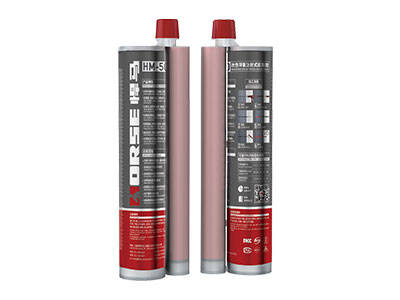
Stage 1 – Crack Surface Sealing with HM-9 Sealing Adhesive
The first step was to clean and prepare the cracked areas on both beams and slabs. The HM-9 sealing adhesive was then applied continuously along the full length of each visible crack to form a dense, airtight sealing layer.
This operation served two critical purposes:
It enclosed the crack to create a stable pressure zone for subsequent injection.
It prevented epoxy resin leakage during low-pressure grouting.
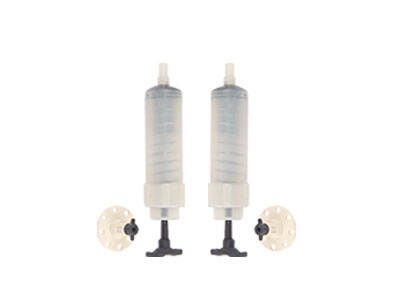
Injection ports were installed at suitable intervals along the sealed cracks, ensuring that the resin could reach deep and remote parts of the crack network.


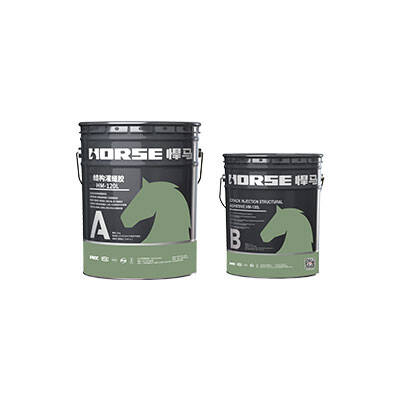
Stage 2 – Deep Crack Injection with HM-120L Crack Adhesive
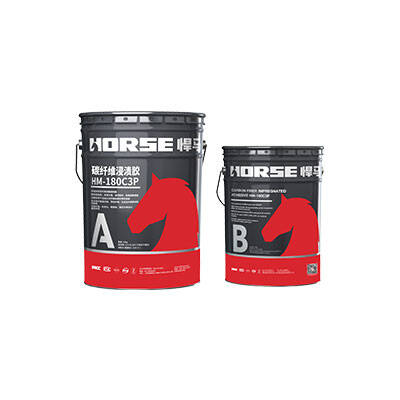
After the sealing layer had cured, low-pressure injection was carried out using HM-120L crack injection adhesive. The low-viscosity epoxy was introduced through the ports, allowing it to penetrate deeply into the cracks and fill even fine internal voids within the concrete.
The injection process progressed sequentially along the crack paths, ensuring that each section was fully saturated before moving forward. Once injection was completed, the system was allowed to cure under controlled conditions so that the epoxy could develop its full mechanical strength.
At this stage, the repair had already achieved important structural improvements:
Crack volumes were filled from the interior.
Separated concrete parts were rebonded.
The monolithic integrity of beams and slabs was restored.
Moisture ingress and reinforcement corrosion were effectively inhibited.

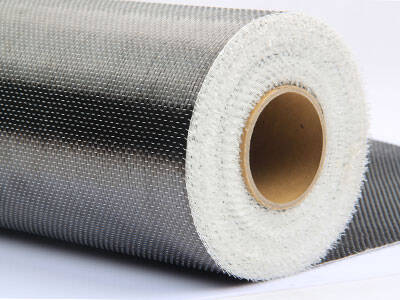
Stage 3 – External Strengthening with HM-30 Unidirectional Carbon Fiber Fabric
After the injected epoxy had fully cured, the concrete surfaces were prepared for the bonding of HM-30 unidirectional carbon fiber fabric. The fabric was applied across the cracked zones on both beams and slabs, with the fiber orientation aligned to the principal tensile force direction.
The carbon fiber reinforcement works compositely with the existing concrete, providing high tensile strength and excellent modulus performance. Its main functions in this project were:
To restrain crack reopening and further propagation;
To improve the tensile and flexural capacity of damaged members;
To enhance the overall structural stiffness and long-term stability;
To distribute local stresses more effectively across the repaired zone.
Project Outcome
After completion of the repair, the cracked beams and slabs were inspected and evaluated. The combined system successfully achieved both internal and external structural restoration:
Internally, the cracks were fully filled and sealed, the concrete sections were reconnected, and moisture penetration was blocked.
Externally, the HM-30 carbon fiber fabric provided continuous tensile reinforcement, controlling crack reopening and improving the structural capacity of the members.
The repaired members met the specified structural performance requirements, and the building was returned to service with an improved level of structural safety.